Card Grading Prep: Penny Sleeve + Toploader, Done Right
By Dana Whitfield, MTG player since 1996 · Updated
A grading submission is the one shipment where the packaging is graded along with the card, in the sense that a card damaged in transit gets the grade of its damage. The hobby converged on one packing format years ago, it costs about a dollar per card, and this guide walks through it in order.
In this guide
The format graders expect — sleeve, toploader, and why that pair.
Assembly, in order — including the tape rule that saves cards.
Boxing and shipping — the sandwich method.
The Format Graders Expect
Check the submission instructions of whichever service you use before you pack, because each publishes its own current preferences on holder types. What none of them accept happily: loose cards, cards taped directly, cards in binders, or cards rubber-banded together. The sleeve-plus-rigid-holder format is the common denominator across the industry, and it is the same format experienced traders use for any card sold online, graded or not.
The economics justify themselves. Grading fees start in the tens of dollars per card, so anyone submitting believes the card is worth at least that. Meanwhile the protection stays cheap: our combos land between 45 cents and $1.00 per toploader with the penny sleeves already included. Skipping a dollar of protection under a $20+ grading fee is not a saving anyone means to make.
Assembly, in Order
1. Handle the card by its edges and work over a clean, flat surface. Grading examines surface gloss under strong light, and a fresh fingerprint on a foil card can be visible.
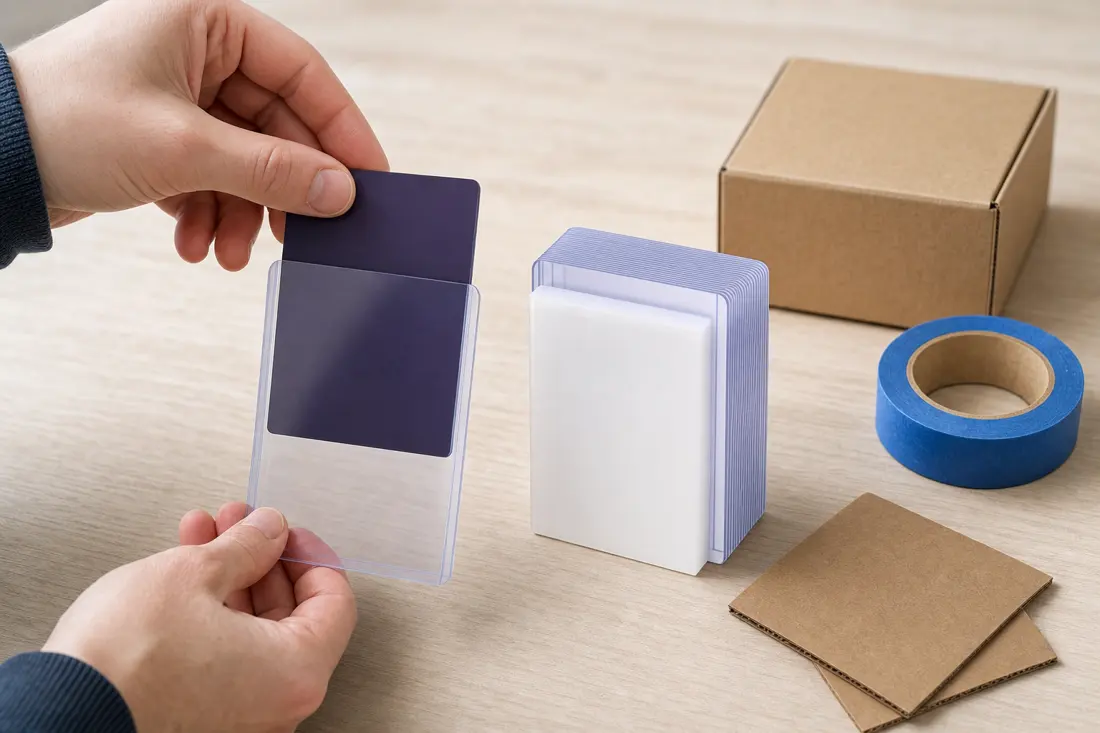
2. Slide the card into a penny sleeve and press it flat to expel air. Our sleeves are cut at 2.67 x 3.6 inches for the standard 2.5 x 3.5 inch card, so the fit is snug without force.
3. Insert the sleeved card into the toploader, closed end down. The sleeve should reach the bottom of the holder without buckling. If a holder arrived with a curve, set it aside; a buyer of the large combo noted in their review that some holders can take a bend in transit, and a bent holder is for storage duty, never for a submission.
4. Tape the opening of the toploader with a short strip of painter tape or another low-tack tape, placed so the card cannot slide out. The tape touches only plastic. If a grader needs to remove the card, low-tack tape releases without tearing the holder or risking the sleeve.
5. Label at the holder level if your submission needs identification, again on tape or sticker applied to the toploader, never the card.
Boxing and Shipping
The sandwich method is standard for a reason. A padded envelope alone depends entirely on the toploader, and postal machinery can apply more force than a single 0.07 inch wall enjoys, which is how holders arrive curved. Cardboard spreads that force across the whole surface. Place the wrapped stack between two cut-to-size pieces, fill the box so the sandwich cannot slide, and the package survives handling that would fold an envelope in half.
When is grading worth it at all? The honest framework is arithmetic, not hype. Add the grading fee, the tracked shipping both ways, and the dollar of packing, then compare that total against the realistic price difference between the raw card and the graded copy at the grade you expect, not the grade you hope for. A card that gains twenty dollars slabbed but costs thirty to submit is a souvenir decision, not a financial one, and souvenirs are a fine reason as long as you name them honestly. Condition drives the expected grade, which is why the storage habits in this guide matter long before any submission: centering is printed into the card, but corners, edges, and surface are decided by how the card lived on your shelf.
One more prep detail that costs nothing: inspect each candidate under a bright light at an angle before you pack it. Surface scratches invisible face-on jump out in raking light, and finding one at home changes your submission list for free, while finding it on the grader's report costs the full fee.
Two final habits from years of shipping cards. First, photograph each card front and back before sealing the box; if a dispute ever arises about condition at shipment, you have dated evidence. Second, use tracked shipping and keep the receipt, the same practice we follow on every SleeveGuard order, where your parcel ships with a tracking number emailed to you within days of purchase.
Supplies for the whole workflow come from two pages: bulk penny sleeves from $9.99 and toploader combos from $24.99, drawn from a product line rated 4.6/5 across 1,716 buyer ratings with over 10,000 units sold, per the verified supplier listing data we cite site-wide. For cards staying home instead of going to a grader, the long-term storage guide applies the same layering logic to boxes and binders.