How We Test Card Sleeves and Toploaders
A few points decide whether a sleeve or a toploader actually protects a card. Here is each one, and what the SleeveGuard printed specifications say about it.
Our criteria
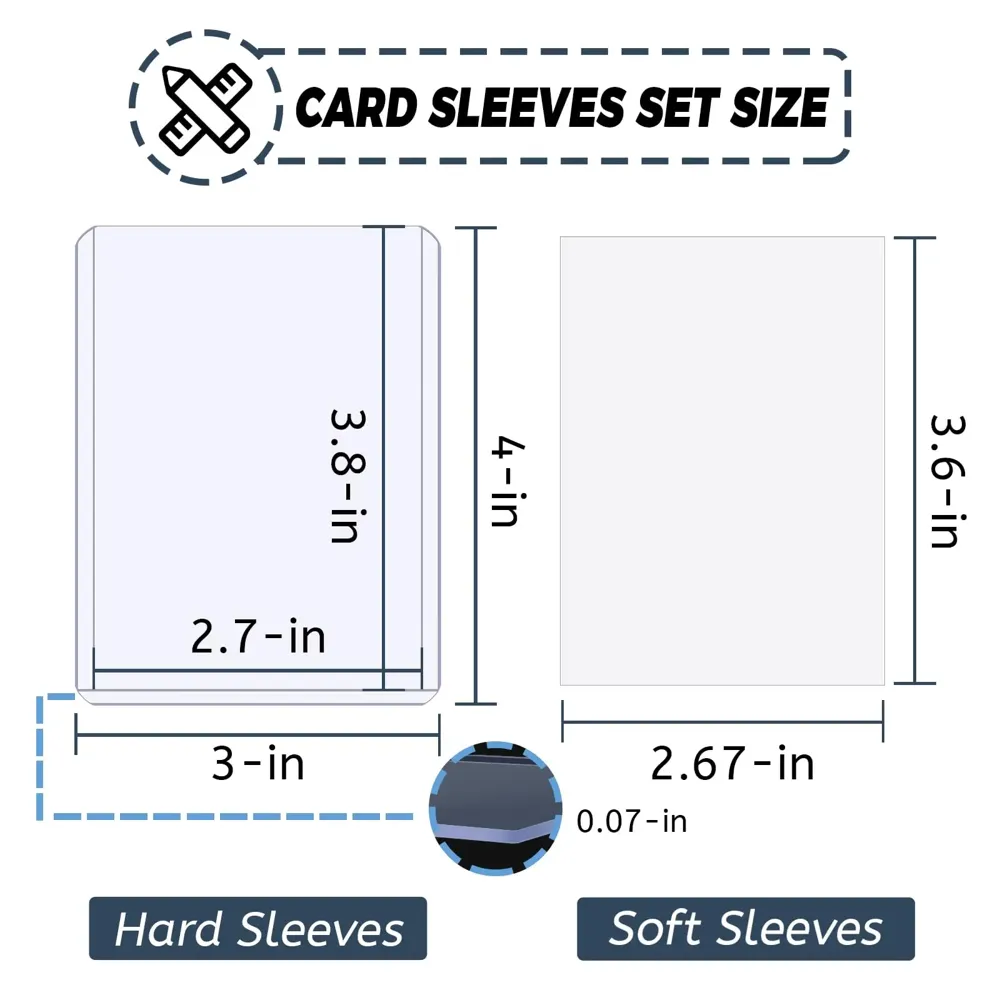
- Sizing against the printed diagram. The published dimensions are 2.67 x 3.6 inches for the soft sleeves, and 3 x 4 inches outer with a 2.7 inch opening for the toploaders. A standard 2.5 x 3.5 inch card should slide in snug, seat fully, and come back out without catching.
- Clarity. Both faces of a storage sleeve should read clearly over printed card faces and text. A storage sleeve you cannot read through is a defective storage sleeve, whatever else it does well. SleeveGuard's penny sleeves are clear, transparent film.
- Seam integrity. The side welds take the load of every insertion. A seam that splits on the tenth insertion makes a defective sleeve.
- Rigidity and flatness. A toploader should lie flat against a table and resist bending when flexed by hand. The 0.07 inch walls are where the rigidity comes from, and any holder that arrives with a curve should be set aside, the same advice we give buyers in the grading prep guide.
- What this covers. Penny sleeves are thin storage film, not shuffle-grade play sleeves, and our toploaders carry no published point rating, so we quote printed dimensions only. Those limits appear on the product pages themselves, not just here.
Where the numbers on this site come from
The 4.9/5 average and the 1,547 ratings count shown across the site are computed from verified rating data, counting the four and five star ratings only. The full corpus holds 4.6/5 across 1,716 ratings; we state both so the figure can be checked. The buyer photos on the reviews page come from that same corpus, each shown with its own buyer's text. Our own review audit, 60 photo reviews read one by one, is the basis for the tallies quoted on the toploaders and penny sleeves pages.
Every order is covered by a 30-day money-back guarantee, so if something arrives wrong, the cost is ours, not yours.