Why Card Sleeves Get Cloudy, Scratched, or Split
By Dana Whitfield, MTG player since 1996 · Updated
A sleeve does its job quietly for a long time, and then one evening you notice it. The card inside looks foggy, the top edge has gone white and furry, one sleeve has opened along a seam you never touched. Nothing dramatic happened in between, and that is the point: sleeve wear is cumulative, not accidental, and every symptom has a cause you can see coming.
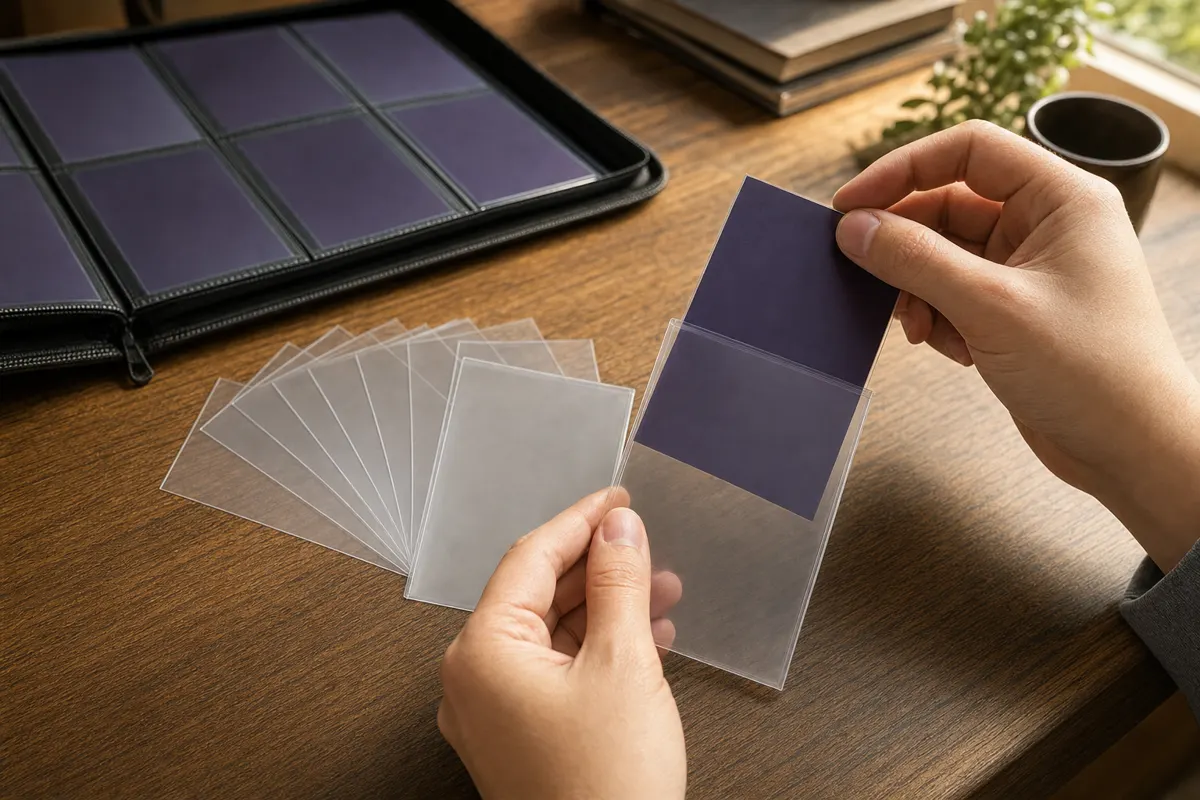
In this guide
What clouding is — why haze appears and why wiping does nothing.
What makes a sleeve split — the three conditions that finish a seam.
When to resleeve — the signals worth acting on.
What Clouding Actually Is
The mechanism is friction, working from both sides at once. Outside, every shuffle drags film against film, every draw pulls a sleeve past its neighbours, every trip into a binder pocket rubs the face along a seam. No single pass leaves a mark; a few thousand leave a surface gently sanded.
The inside contributes too. A card's edges are firmer than the film around them, so each time it shifts it scores the inner wall along the same lines. This is why grit matters: a grain of dust that gets in becomes an abrasive, worked back and forth every time the deck moves.
A second, slower cause has nothing to do with rubbing. Soft films stay flexible thanks to additives blended into the plastic, and over time — much faster in warmth — some of that blend migrates to the surface and settles as a faint bloom. It is why a sleeve left in a hot room can look duller than one handled in a cool one.
The two are easy to tell apart. Breathe on the sleeve and wipe it with a soft cloth: bloom lifts and clarity returns. Micro-scratches do not lift, because nothing sits on the surface to remove. The surface itself is the problem.
Why Some Finishes Show It Sooner
A clear soft sleeve is optically honest, and that is what you buy it for. Nothing stands between your eye and the card, so the first time light scatters, you see it. That visibility is a feature: the sleeve is telling you it absorbed friction that would otherwise have landed on the card face.
Textured and matte finishes behave differently. Their surface carries microscopic high points — the source of both the diffused look and the shuffle feel — and those points take the contact first. The optical change is hard to spot, because a diffused surface that becomes slightly more diffused still looks like itself. What you notice is the feel: a back gone slick in the middle where thumbs have polished the peaks flat, while the corners still grip.
Fit plays into it too. A sleeve cut close to the card holds it still, so the card scores fewer lines inside; one the card can swim in slides on every movement. Our soft sleeves are cut at 2.67 x 3.6 inches against the standard 2.5 x 3.5 inch card for that reason. The sleeve sizes guide covers how the cuts differ.
What Makes a Sleeve Split
Start with shuffling, the load nobody counts. A riffle bends every card through an arc and releases it; a mash pushes two halves into each other edge first. The film fails the way anything flexed repeatedly at one spot fails, losing its willingness to spring back, until a bend once absorbed becomes a crease and the crease becomes an opening.
The mouth is where this concentrates. It is the only open edge, so nothing reinforces it, and it is where fingers push a card in and pull it out. Whitened, fibrous corners there are the visible stage — not cosmetic, but the announcement that the seam beside them has been working.
Temperature is the accelerator people meet by accident. Plastic comfortable to flex in a warm room is stiffer when cold, and stiffer film cracks where warm film bends. A deck shuffled straight out of a cold car in winter, or pulled from an unheated garage, is flexing at its least cooperative. Letting it reach room temperature first costs nothing.
Damage also compounds. A nick from a fingernail, a scrape from an overpacked box, a corner caught on a binder pocket: each leaves a discontinuity in an even edge, and stress concentrates there. Splits appear where a sleeve was already marked. It did not fail randomly; it failed where it had been hurt.
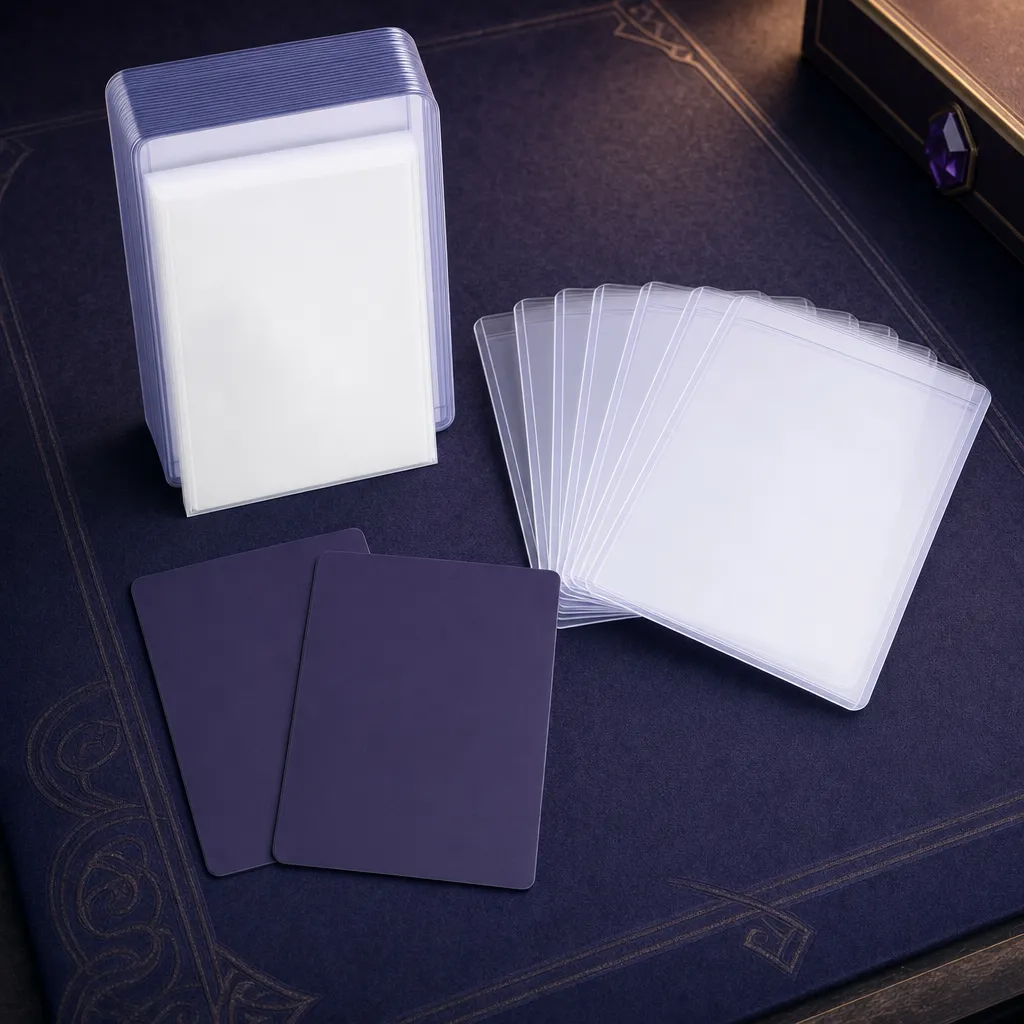
Sun, Car Heat, and an Overpacked Box
Direct sun is the harshest, delivering ultraviolet energy and heat together. Sunlight turns a clear film yellow and, with enough exposure, brittle, so a sleeve that used to flex simply snaps. A deck box on a windowsill or a passenger seat takes a concentrated dose of exactly this.
Car heat works even in the shade. A closed car in summer becomes an oven: warm film softens, takes an impression readily, and sheds additives to the surface faster. Sleeves that cooked together come apart tacky, and that does not reverse.
An overpacked box is the least obvious and the most common. When a row is crammed, removing any card scrapes it against both neighbours along its full height, so a routine sorting session becomes hundreds of abrasive passes. The same pressure holds every sleeve in slight compression, which is how a stored deck develops a bow it never had.
These three sit at the boundary between sleeve care and card care. The wider storage question — shelf position, humidity, binders versus boxes — is covered in how to store MTG cards long term. The short version for sleeves is that they want what cards want: stable, dark, and not crushed.
What Worn Sleeves Do to the Card
The condition problem is the one that costs money. Grading, trading, and selling all begin with someone judging a card through whatever it sits in, and a hazed sleeve makes a near-mint card look played. Before a card is assessed by anyone else, it goes into a fresh sleeve: a standing rule in our grading prep guide.
The protection problem is more direct. A split leaves an opening at the exact point where a dropped deck lands and where dust enters, while the grit already inside sits pressed against the card face by the layer that was supposed to shield it.
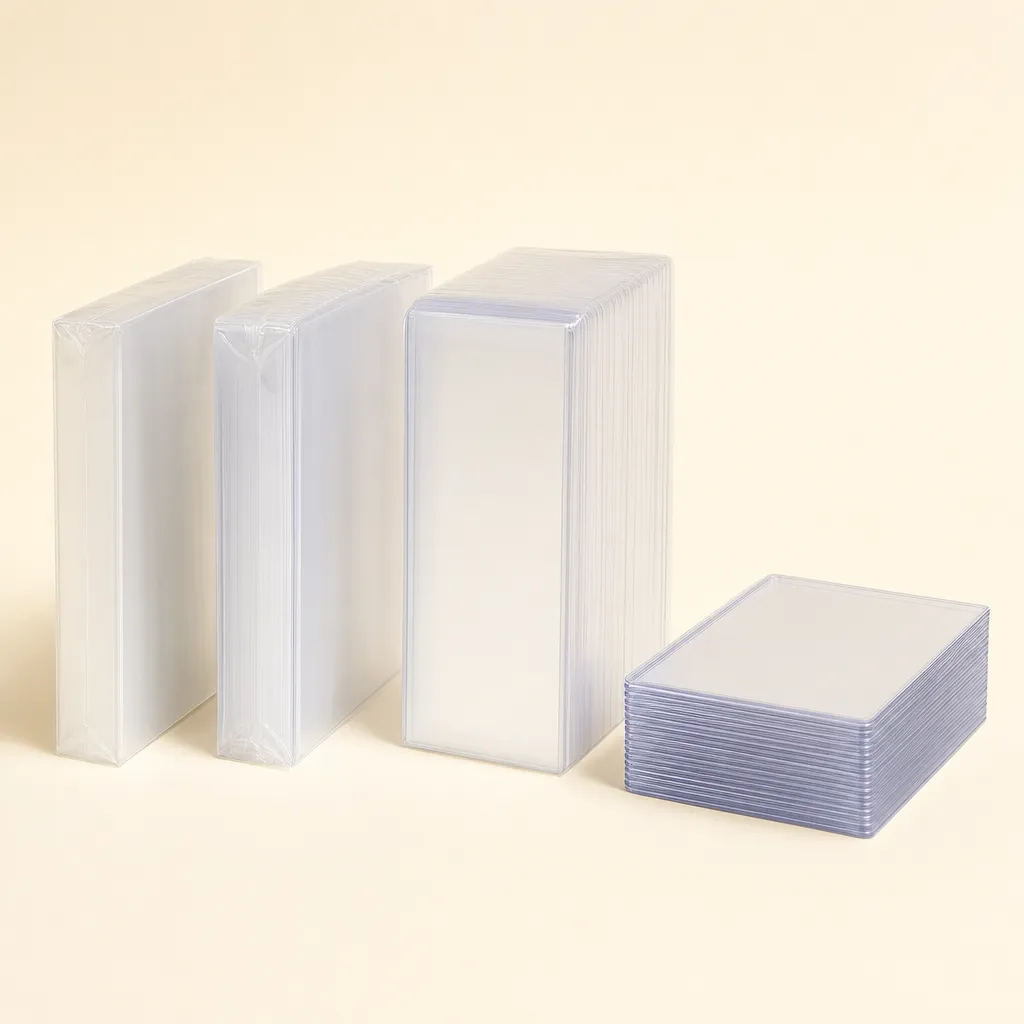
This is where the layered approach earns its place. A soft sleeve is a consumable surface designed to take wear so the card does not, and a rigid toploader over it adds the bend and crush protection film cannot provide. For cards needing a real seal against dust and moisture, double sleeving adds a second layer in the opposite direction and closes the opening entirely.
The Signals That Say Resleeve Now
Haze that survives a wipe. Bloom cleans off; accumulated scratching does not. If clarity does not return after the breath-and-cloth test, the surface has spent what it had to give.
White, fibrous corners at the opening. The pre-split state, and the last warning before a seam goes.
Any tackiness. Sleeves that cling or resist separating have been heat-affected. The change is permanent.
A mouth that has flared. A new sleeve's opening lies flat. One loaded and unloaded many times bells outward, inviting dust straight in.
A card that no longer sits flush. If a sleeved card stands proud of its row, or a deck no longer squares up cleanly, sleeves have deformed.
Any split, however small. There is no partial split. A seam opened a millimetre will open further at the next shuffle.
One habit catches all six: look at the deck as a deck. Square it up, hold it to a light, and check the block rather than the single sleeve. Wear is uniform across a deck played together, so when a few sleeves show it, the rest are close behind — which is why resleeving a whole deck at once beats replacing them one by one.
Treating Sleeves as the Consumable They Are
Every scratch on a sleeve is a scratch that did not land on a card, so a worn sleeve is not a disappointment. It is a receipt. A soft outer layer exists to absorb wear cheaply and be swapped once it has, and the only mistake available is leaving a spent sleeve in place long enough for the card to start taking the damage instead.
Bulk is what makes that comfortable, which is why our penny sleeve packs run from 100 to 300 at $9.95 to $19.95, and the combos pairing sleeves with toploaders sit between $24.95 and $44.95. A 100 pack covers exactly one Commander deck, and a spare in the drawer means that the moment you notice white corners, you can act that evening.
Two practical notes. The inner sleeve of a double-sleeved card lives a sheltered life — not shuffled, not handled, not scraped by a box wall — so replacing the outer layer alone is usually all such a card needs. And resleeve over a clean surface, because the dust off a spent set is exactly what you do not want joining the new one.
Cards outlast their sleeves by design, and thirty years of collecting has convinced me that is the best deal in the hobby. The plastic takes the friction, the sun, the heat, and the shuffling, and when it has taken enough, cents replace it. The card comes out in the condition it went in, which is the entire point of putting it in one.